
Putting people at the heart of AI: RGU launches centre to shape the future of healthcare
Thursday 05 November 2026

Robert Gordon University (RGU) has launched a new research centre that brings together expertise in computing, engineering and health to develop next-generation artificial intelligence (AI) technologies aimed at improving patient care and healthcare delivery.
The Personalised Artificial Intelligence Technologies for Health (PATH) research centre will focus on creating intelligent, human-centred technologies that support people living with chronic conditions, enhance health monitoring and enable more personalised approaches to care.
A collaboration between RGU's School of Computing, Engineering and Technology and School of Health, PATH combines technical innovation with clinical and health expertise to address real-world healthcare challenges. The centre will support the development of practical, trustworthy technologies that can be translated from research into healthcare settings.
PATH was officially launched at ONE BioHub on 28 October, with representatives from NHS Grampian attending in support of the initiative.
Professor Seshadri S. Vasan, NHS Grampian's Director of R&D and Commercial Research Delivery Centre, said: "Personalised health applications of AI, machine learning, and data analytics can transform service delivery through NHS demand reduction and better patient outcomes. It’s fantastic to witness Robert Gordon University's leadership on these topics. NHS Grampian is pleased to support and partner with this important initiative."
Advancing personalised and trustworthy healthcare
PATH is led by co-directors Dr Kyle Martin from RGU's School of Computing, Engineering and Technology and Professor Paul Swinton from the School of Health.
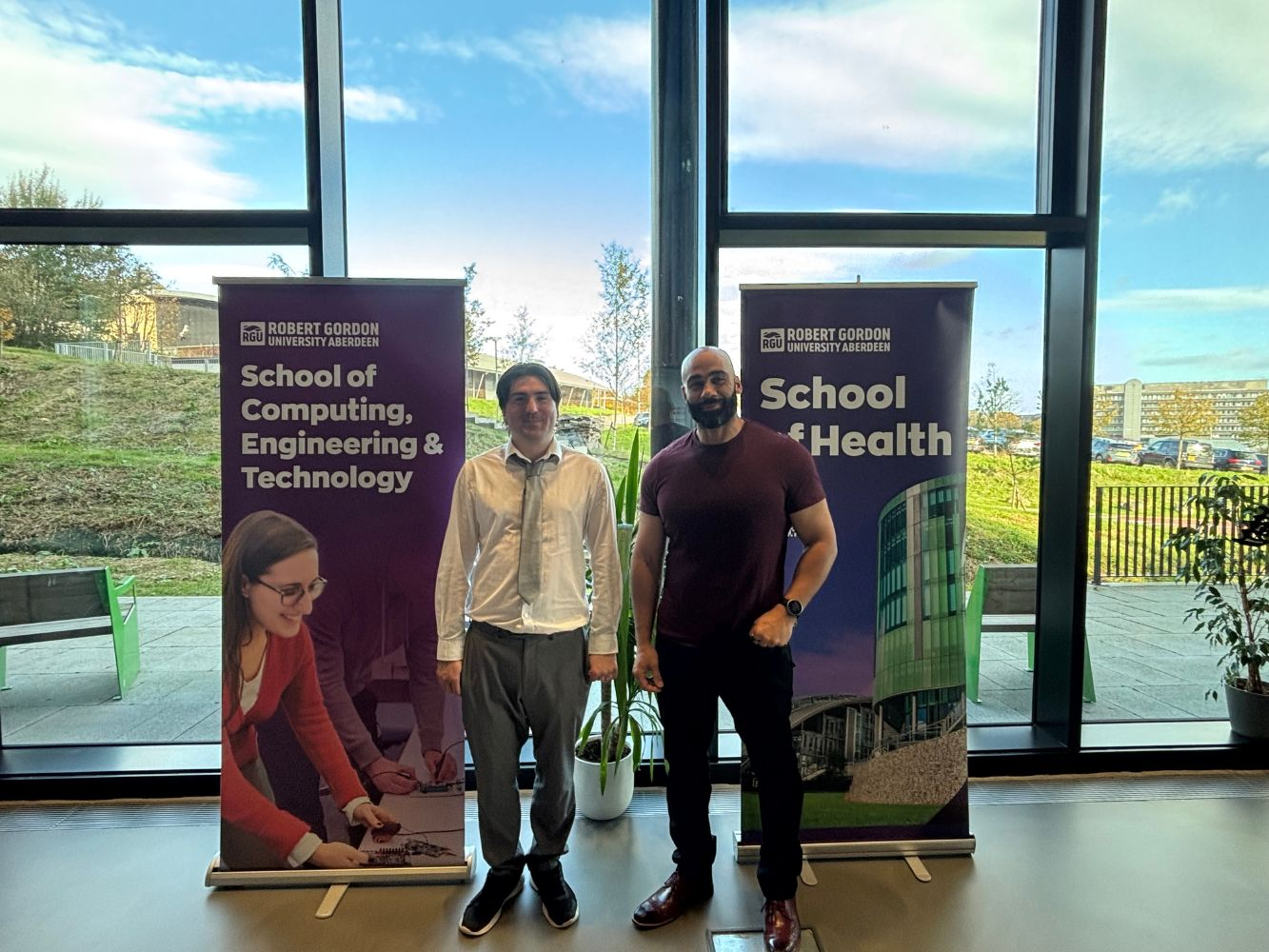
The centre's research spans personalised interventions, sensor technologies, immersive environments and human-centred approaches to healthcare. Areas of focus include the use of intelligent technologies to support the monitoring and management of chronic conditions, alongside the development of digital interventions tailored to individual circumstances.
By combining expertise in AI and engineering with knowledge of health, physical performance and patient care, researchers aim to develop technologies that are not only effective, but also accessible, transparent and responsive to users' needs.
Dr Kyle Martin said: "Personalised AI has the potential to transform healthcare by providing support that reflects the needs and circumstances of each individual. It is important that these technologies are not only effective, but also transparent and explainable, so people can better understand and trust the decisions they inform."
Professor Paul Swinton added: "Developing effective AI technologies for healthcare requires a deep understanding of the complexity of health conditions, individual circumstances and the challenges people face in managing their health.
"Beyond technological innovation, we need robust frameworks that enable technologies to continuously interact with, and adapt to, individuals, supporting engagement, improving adherence to interventions and building confidence in managing their own health.
"PATH brings together expertise across health, computing and engineering to develop and rigorously evaluate these approaches, ensuring that technological advances translate into meaningful and sustained improvements in health and wellbeing."
Turning research into real-world applications
PATH builds on more than 25 years of digital health research and innovation at RGU. Current projects include the EU-funded MAYA programme, which is developing a conversational smart mirror powered by agentic AI to support cardiovascular health self-management among young cancer survivors, as well as research exploring the co-creation of a digital safe space to support the mental health of pregnant women.
The centre will draw on RGU's specialist facilities, including human performance testing, robotics and advanced materials laboratories, alongside secure computing infrastructure that supports AI development and analysis.
These resources will enable researchers to develop, test and evaluate emerging technologies, helping them address real healthcare challenges and identify opportunities for practical implementation. Partnerships with healthcare providers and industry will further strengthen the pathway from research to application.
Working closely with RGU's Research, Innovation and Enterprise (RIE) team and the Medical Device Manufacturing Centre (MDMC), PATH will support the development, validation and commercialisation of healthcare technologies.
As the centre grows, it will expand its work in areas including chronic disease management, digital therapeutics and AI-enabled patient support. Through this research, PATH aims to contribute to the development of personalised healthcare solutions that improve outcomes for patients while supporting more effective and sustainable healthcare services.